Showing posts with label U.S. History. Show all posts

Thursday, April 12, 2012

After Firestorm of Protests, Florida Forced To Charge Trayvon's Killer With Murder


By Monica Moorehead
Published Apr 11, 2012 10:29 PM


George Zimmerman, the killer of the 17-year-old African American Trayvon Martin, was formally charged on April 11 with second-degree murder. It took the state of Florida 45 days to make an arrest of the wanna-be-cop Zimmerman, who fatally shot the unarmed teenager on Feb. 26 because he looked “suspicious” while wearing a hoodie.

The charge was announced by Angela Corey, a special prosecutor who was assigned to the case on March 14 in order to decide whether or not to bring charges against Zimmerman. A conviction can carry anywhere from a 25-year sentence to life in prison without the possibility of parole.

The Statewide Prosecutor's office and the Sanford Police Department had initially refused to arrest and charge Zimmerman with Martin's murder. They gave as an excuse Florida’s “Stand Your Ground” law, which protects those who claim self-defense. Sanford, especially its police department, has a sordid history of blatant racism against the Black community.

While Corey at her press conference was singing the praises of her prosecutorial team, the governor and the police authorities, she didn't say what was most glaring: that there would have been no arrest or charges against Zimmerman had it not been for the massive explosion of all forms of protests from below — rallies, marches, sit-ins, teach-ins, walkouts and more, all demanding justice for Trayvon Martin.

Furthermore, all these forms of grassroots protests in big and small cities were inevitably leading toward a massive rebellion, starting in Florida and spreading throughout the country — if Zimmerman had not been charged with murder. The real possibility of such a rebellion led by Black and other oppressed youth weighed heavily on the racist, capitalist ruling class, who already have their hands full attempting to manage an unmanageable economic crisis.

Larry Hales, an organizer of Occupy 4 Jobs and the People's Power Tour, stated in an April 11 press release, "What made this case so egregious is that Zimmerman was never initially arrested for the heinous crime against this teenager. In many cases, racist police and vigilantes are at least put on trial, even though 90 percent of the time they are given a slap on the wrist, resulting in very little jail time, or they are not convicted and are set free. The arrest of Zimmerman is one step in a long process of bringing about justice for Trayvon Martin and his family."

Hales went on to say, "This case is more than about Trayvon Martin. He is the face of all Black and Brown young people who are racially profiled by police and vigilantes. This case is the tip of the iceberg of the war against Black and Brown youth, a war that includes growing incarceration, attacks on education, depression-level unemployment and more. We must continue to build a struggle for social justice so that victims like Trayvon Martin will not have died in vain."

In the days and months to come, the movement must be on alert in every step of the process to bring Zimmerman to justice by mobilizing in every neighborhood, every city and every state.

Sunday, April 8, 2012

PressTV: Bankers, Corporations, and U.S. Foreign Policy


Full Video Here

An analyst says that the criminal war tactics by the US based on lies to sieze other country's resources and the clampdown on US citizen's rights is demanded by US elite bankers and corporations.


Press TV has interviewed Caleb Maupin, International Action Center, New York about the means exercised to achieve the Western imperialist agenda and how this relates hand in hand with controlling banker and US corporation influence over the US government and the US judicial system. What follows is an approximate transcript of the interview.


Press TV: Even prior to this memo (George W. Bush memo approving use of torture) surfacing everyone knows that Washington led everyone to war based on a lie that Saddam Hussein had weapons of mass destruction. So, why are George W. Bush and his accomplices still free in your perspective?

Maupin: The first thing we need to keep in mind about the war in Iraq was that it was just the latest episode in a continuing effort by the US to go in and overthrow governments that defy them and don't do what the bankers on Wall Street would like them to do.

And it continued… Right after the election of Barak Obama the government of Honduras was overthrown in a coup d'tat that was backed by the CIA. The events in Libya where the government of Muammar Gaddafi was overthrown by Western forces supported with NATO bombs is the same kind of thing.

So, continually there is an effort, whenever some government stands up to the will of the bankers and the corporations, the response of Washington DC and Wall Street is to bomb and destroy.

They justify this imperialism essentially; and war for profits… they justify that always with talk of democracy; they're always doing it because they care so much about democracy and freedom.

But then, it's pretty apparent they don't really believe in those ideals because they're torturing people as this memo has shown and in addition, the governments they support around the world who do obey corporations are hardly democratic forces at all.

The government that replaced the Honduran democratically elected government of Manuel Zelaya, the government that replaced it was a military dictatorship.

In Libya, the forces that have replaced Gaddafi's government are going around massacring people so badly that even Doctors Without Borders will not associate with them because they are engaging in such horrendous acts of torture.

The idea that the US just out of the goodness of its heart cares, and you know, invades countries because it just cares so much is such a falsehood. The US, the military, the Pentagon, they all work for the bankers and the corporations and their end is to conquer; to bring profits to the banks; to bring profits to Wall Street and to keep the rest of the world enslaved so that they can continue making profits. That's what that's about.

And so whenever we hear them demonizing some government abroad we need to be suspicious because anytime they label a government as undemocratic or they label the government as terrorists or supporting terrorism, we need to remember it's coming from the mouths of the greatest terrorists in the world - The US corporations and the bankers, they're the greatest terrorists in the world. Whenever they accuse someone of being undemocratic, they're the most undemocratic forces in the world.

Press TV:
What you're saying is that it was a continuation - the war in Iraq a continuation and what we have seen since that time for example the involvement as you said in Honduras or Libya or perhaps even now as we speak, in Syria, is a continuation of that process.

But the question is where are the checks and balances internationally? Is it that the US can just get away with whatever it wants? Where is the international checks and balances then?

Maupin:
The international check and balance that can be established is the rising global movement. Occupy Wall Street has made it clear it supports the people all around the world that are struggling against the bankers and the corporations and the growing alliance between people in every country that are defying imperialists whether it's in Venezuela; whether it's in Cuba, Bolivia, Iran, Syria wherever people are struggling and defying imperialists there needs to be an alliance because the main enemy of humanity is on Wall Street.

The bankers and the corporations are the main enemy of humanity and if we're going to restrain it's going to take a global movement - a united struggle against these bankers and these corporations.

That's the glorious thing; people need to be in the streets and they are increasingly in the streets demanding that this end. And the Wall Street corporations that continue these wars, they are the same enemy of working class people in the US who are having their jobs shipped over someone else who will work for lower wages; the same corporations that are foreclosing on their houses and causing mass evictions and home foreclosures throughout the US - they are the same enemies. It's the same enemy.

A global alliance between workers in the US and working class people abroad who are defying the will of the banks and the corporations, that's the check and balance that needs to be created.

Press TV: One would think that in these very tough economic times at least if we look at this from the financial aspect and the cost these wars have had on the American economy itself that there would be more Americans demanding not only compensation for the costs that have been inflicted on the tax payers, but in general wanting someone to answer to them for destroying the society itself - the economy.

I know that you are part of the Occupy movement, but in general have we seen… we are not really seeing the mass protests the major numbers that one would expect from the American people at this point in time. What's your take?

Maupin:
The wrecking of the US economy - this is something that the US corporations and bankers, which own the US government are very good at. When they overthrew the socialist governments of Eastern Europe and put them in there they replaced the socialist governments with governments with higher rates of sex trafficking; the life expectancies went down…

Every time they've overthrown a government and done this they have never created peace and prosperity; it's always led to mass suffering for people all over the world.

The idea that these people in the US who send the NYPD out to run at us with orange nets; to pepper spray people; to break people's ribs; to step on people; to grab people - they do that when people just demonstrate for the crime of holding a sign in the street.

You know, to think that this government is a symbol of democracy is outrageous. Prior to the sanctions that were put on Iraq, Iraq had one of the higher life expectancies in the Middle East because they had seized the oil - the oil in Iraq did not belong to the Wall Street bankers and the corporations and as a result it went to provide for the economy in Iraq.

Well, now those profits are on Wall Street and those profits are in the hands of Wall Street bankers and corporations and the people in Iraq are in misery; there is not a single place in this world where the bankers and the corporations have intervened, have overthrown a government, have killed people - and they do kill people massively, and the result has been good for the people.

The result has always been the life expectancy of the people going down and misery; and the profits being sucked out of that country and going to the bankers and the corporations on Wall Street and that is the result of what US imperialism and what the bankers and corporations have.

And they're doing it in the US - they're destroying the economy; they are creating a low wage system and as a result there are millions and millions of youth in this country who don't have a future and their only choice is to pour out in the streets and demand justice.

The Treyvon Martin case coming up on May 10th there is going to be mass demonstrations because that is when the grand jury is going to decide. The US corporations and the bankers are so determined to keep racism - this ugly tool they've used to divide the working class and play worker against worker; they can't even convict a man who shot someone through the chest; they can't even charge him with a crime - that's how important racism is in maintaining their system and keeping their order and their power in the US.

This whole system is based in profits and exploitation and nowhere on the Earth, nowhere, can you show me a single place where the US has gone in, intervened and helped the people, the people have always have always ended up in a worse situation; the economies have gotten worse, but the profits have gone up.

The bankers and the corporations, which rule this government, are the worse mass murderers in this world. If we had a just society they would be in prison right now fro crimes against humanity because they have committed crimes in front of the entire world and gotten away with it.

Thursday, April 5, 2012

Racism robs Black youth of their dreams

By Larry Hales
Published Mar 28, 2012 8:30 PM


Trayvon Martin, the 17-year-old Black youth killed by racist vigilante George Zimmerman, was robbed of any opportunities that the future may have held for him. His parents were robbed of their son, his younger stepbrother a guiding hand, his girlfriend, other family members and friends a person who brought them immense joy, laughter, heartache — all the gifts and frustrations that a loved one brings.

And that he was killed by a man who by his own admission chased him because he was Black and wearing a hoodie, yet still walks free because of some dubiously written law, makes the tragedy that much greater.

Many wonder how Zimmerman remains free when the facts of the case are so clear. Trayvon had no weapon and was significantly lighter than Zimmerman, outweighed by nearly 100 pounds.

Trayvon was the one being stalked and then chased in fear for his life. This was validated by the young woman on the other end of the telephone call with Trayvon as the young man fled.

It would seem that the specific provisions of the Florida “Stand Your Ground” law would contravene the decision of the Sanford Police Department to allow Zimmerman to walk free, citing his right to self-defense.

However, this is U.S. society, where the seeds of white supremacy were first planted, a country built on the most extreme forms of oppression and repression. Therefore a law may be written in general, but the atmosphere is poisoned by racism and national oppression. The Florida statute may state that the person using deadly force has to reasonably believe that his or her life is in danger, Zimmerman may have outweighed Trayvon, and Trayvon’s only weapons may have been a can of iced tea and a bag of Skittles, but apparently his Blackness was not only enough to draw suspicion but justified the use of deadly force.

The overwhelming evidence showing that a young Black man was executed by a vigilante and then again by a police force that is on record for covering up crimes, especially committed against people of color, begs the question — what is the value of a Black life?

Justice for Trayvon would mean that Zimmerman is arrested, tried and imprisoned; that the entire police department and the officers involved are fired and then tried for covering up the facts of this case; and that the SYG law, in a racist society like this one, is repealed. That would be merely the beginning.

Countless Trayvon Martins


What of Ramarley Graham, the young Black male shot in his bathroom in front of his grandmother and six-year-old brother in Bronx, N.Y., earlier this year?

What of Travis McNeal killed by Miami cops Feb. 11, 2011, when he and his cousin were stopped while driving, or of Decarlos Moore, Joel Lee Johnson and the four other unarmed Black men killed by Miami police last year?

What of 18-year-old Dane Scott Jr. shot in the back by police after a car chase in Del City, Okla., this year?

What about the many more unknown innocent Black men and women beaten, killed or humiliated by police all across the country, or the millions of Black women and men in jail, prison or on parole or probation? These are victims of the racist criminal justice system and of a society that cuts back on spending for schools and allows a greatly disproportionate number of people of color to be jobless, homeless and without hope of finding a well-paying job so they can care for themselves and their families.

The Black unemployment rate is still over 14 percent, and if that number alone isn’t enough to indicate how dire the situation is, a more accurate account reveals that only 56.6 percent of the Black population is employed. For Black youth the unemployment rate is over 40 percent, and the employment ratio is barely over 50 percent.

In his 1967 speech “Where Do We Go From Here,” Dr. Martin Luther King Jr. stated, “Of the good things in life, the Negro has approximately one half those of whites. Of the bad things of life, he has twice those of whites.”

That remains so, in housing especially, considering that a large number of people being foreclosed are people of color, with a high number Black. Adjustable rate mortgages were forced on them where the payments quadrupled after four or five years. According to the Center for Responsible Lending, 11 percent of Black homeowners lost their homes from 2007 to the present.

The Institute for Children, Poverty and Homelessness reports that Black families are seven times more likely to be homeless than whites and 38.8 percent of sheltered people in families are Black. A 2009 Regal Magazine article states that 49 percent of homeless people in total are Black.

Those who live in poverty or near poverty number are about 150 million. The official poverty threshold for a family of four is $24,343, and even a family with a household income of $49,000 struggles.

The average Black household income measured in 2011 was $32,000, a decline of 3.2 percent from the prior year.

Though the statistics appear stark enough, it is important to elucidate the reasons behind the conditions that Black people in the U.S. and all people of color really face.

What is the value of a Black life?

To repeat, what is the value of a Black life? All life is precious. But a system that places the profits of a few over the needs of the many turns the just mentioned mantra on its head. How can life be precious if the necessities of it are commodities to be sold for profit? How can life be precious if much of humanity is engaged in selling their labor to make wealth they will never see for a wage designed to ensure that the buyer of the labor gets their profit and becomes richer still?

It is people of color, Black, Latino/a, Indigenous, Arab and Asian who disproportionately live on the fringes, suffering from years of conquest, genocide, slavery, apartheid and racism — all symptoms of national oppression. Because of their conditions, they are the greatest impetus for change.

National oppression is a byproduct of the for-profit system, a weapon to keep working people and their families from seeing their commonness, to keep people fighting amongst one another over differences in culture, religion and other beliefs.

Trayvon Martin had his life to look forward to. He was just beginning to dream, to piece together what he wanted his adult self to be, but he was a victim of the racism that pervades U.S. society. He was no less than any other 17-year-old, and he may have gone on to do great things, become a leader or a scientist — one will never know.

But, what is sure, is that for any young person, especially an oppressed person, to be guaranteed to reach their full potential, the society that has created disproportionate suffering and hardship based on skin color must be thrown into the dustbin of history, and a new one must be born. Trayvon may have been the leader of such a struggle, but as it is, it will have to be waged in memory of him and all those young Black and other oppressed youth who were victimized until they were sent to an early grave.

Monday, April 2, 2012

NO ONE KNOWS WHERE! OWS and the Role of Communists


A Response to Jay Rothermel

The truest brilliance of Marxism-Leninism is not its analysis. Prior to both Marx and Lenin, an understanding of one class owning the means of production, and the other class selling their labor, existed.

Marxism-Leninism puts this understanding into a historical context, giving it a direction, understanding the laws of historical development, and how one of these classes can triumph over the other.

Spontaneity and Revolution


Leninism, specifically, is the development of the strategy and methods of achieving this goal. The brilliance of Leninism, is that it clarifies the Marxist concept of “historical inevitability.” Leninism lays forward the understanding that workers will not simply awaken one day, magically moved by material conditions to rise up and overthrow the capitalist system.

Rather, Marxist-Leninists understand that a disciplined vanguard party, made of the most advanced elements of the working class, must push the rest of their class forward, providing the leadership needed to overthrow capitalism.

Lenin pointed out that “spontaneity” cannot create a revolution. Workers will, in certain instances, develop “spontaneous uprisings.” They will confront their oppressors, but in doing so they will lack any clear understanding of who is oppressing them and why. This basic hostility, left to its own devices, without any clear leadership, will only lead to “trade union consciousness.” Only a revolutionary party can elevate it to a higher, revolutionary consciousness.

So, with this understanding, the approach to OWS currently being utilized by myself and Workers World Party, and criticized so harshly by Jay Rothermel’s Marxist Update, The Militant, Worker's Vanguard, and other Marxist publications, is correct.

Occupy Wall Street is a textbook example of spontaneity. Youth, primarily the children of the former Labor Aristrocracy and the Petty Bourgeoisie, have poured into the streets. They say “We are the 99%.” They denounce corporations and bankers in the most elementary form of pre-class consciousness ever.

Their only unifying message is “the people with all the money are screwing us over.” This is not incorrect, of course, but it is, as Marxists know, just the tip of the iceberg.


With “we are the 99%” as their rallying cry, they do battle with the New York City Police Department on a Semi-Daily basis. They seize pieces of capitalist property. They shake society. They capture the imagination of millions of working class people, who share their basic, pre-class conscious sentiments.

This is spontaneity.

The job of vanguard party, is thus, to intervene. It must support this struggle, and in the process, attempt to purify and cement its politics in a revolutionary direction. The job of a revolutionary party is to turn every spark into a “general conflagration.” Failure to do so, is failure to carry out the job of a revolutionary party.

How Do You Influence A Mass Movement?


OWS is a spontaneous uprising, and sadly, so much of Marxist left approaches it OWS with the same sectarian habits they take to all spontaneous uprisings.

In New York City, I have read more leaflets, newspaper articles, and pamphlets than I count with the same message:

Its not 99% v. 1%. It’s the bourgeoisie v. the proletariat. Read Marx, kids! We Communists are so much smarter than you!

These endless screeds, most of them harshly attacking OWS, and criticizing it in an extremely condescending manner, have no impact on the OWSers. They go in one ear and out the other, with speed to equal to the Limbaugh fans who scream "get a job!" from their taxi cab windows.

They all read the same, no matter whether the Spartacist League, International Bolshevik Tendency, Socialist Workers Party, or whoever printed them.

These screeds all approach OWS in the manner Lenin approached the Socialist-Revolutionary Party or the Narodniks. They all act as if OWS is not a spontaneous uprising, but a developed opportunist political tendency. They would believe that “mathematicism” of “99% and 1%”, is a contrary ideology to Marxism with “bourgeoisie and proletarian.”

This is a fatal error. OWS is not an ideological current. OWS is a spontaneous
uprising.

Marxists should not approach “99% and 1%” with correction. Rather, they should approach it as a “fill in the blank.”

99% and 1% can be defined in any manner desired. Marxists are free to define it as bourgeoisie and proletarian.

The hostile, corrections coming from the sectarian left, are no different than approaching a striking worker who has a sign against “the boss” and saying: “You idiot! Its not the boss, it’s the bourgeoisie! Haven't you ever read 'Wage Labor and Capital!'”

The worker, with a spontaneous understanding, knows who the boss is, but not the class relationship. Does the Marxist feel he or she will gain influence by correcting the worker in a hostile manner?

Or why not join the workers picket line, chant “Kick the Bosses in the Ass!” with him, and in the process of being in the trenches, offer him a vision of a world without bosses?

The Political Evolution of OWS


In the early days of OWS, anti-Communism was very present. Those who walked with signs bearing the name of Communist groups were met with hostility. They were told “why are you trying to take this over?” "This isn't about parties, dude." They were asked “how much do the Cubans pay you?”

Furthermore, racism and extreme insensitivity showed its face. Statements flat out denying national oppression were frequent. Ron Paul’s minions and John Birch Society members walked with the protesters as brothers, while Marxists were treated with hostility.


But this has changed, almost completely.


Why has it changed?

Because the John Birch Society is gone. The wealthy liberal foundations which spewed “don’t let the Communists take over” are gone. The NGOs are gone. The Democratic Party is gone.

However, thousands of youth still remain. Thousands of youth for whom this system has no future, remain in the streets, despite the rhetoric of all the “non-leaders” who tell them: “good work, now go home and vote for Obama.”

The mis-leaders are trying to crush this uprising.

But a small section of the Revolutionary Marxist-Leninist movement is still there.
OWS has gone from a movement that bragged about starting on “constitution day”, to being a movement that is calling for a General Strike on May 1st.

Among the occupiers now at Union Square, the common point of observation is “where have all the lap tops gone?”

All the liberal bloggers are gone. All the hipsters and Democratic party lackeys have vanished.

OWS has evolved to be a largely multinational grouping, no longer majority white. It has given the boot to the “professional left” of NGO funded liberals. It has either scared away or recruited their minions.

Crusty punks, Anarcho-Syndicalists, laid off middle aged workers, and straight up revolutionary activists now sit at the center of this movement.

For years the sectarian left has been proclaiming “General Strikes” as the only answer, and now thousands and thousands of youth are calling one. They are calling it on International Workers Day. They are holding a joint rally with immigrant workers and with labor unions, while demanding “No Work! No Shopping! Into the Streets!”

They have embraced the cause of Trayvon Martin as their own. The phrase “you are the 99%” is no longer chanted at the police. Instead a song entitled “You ain’t nothin’ but a bad cop!” to the tune is Elvis Presley’s classic “Hound Dog” is hurled at Bloomberg’s private army.

Red Flags fly. “Class War” signs and banners are prevelant. Chants of “Just like Ho Chi Minh, Occupy is Gonna Win!” are heard ringing out at rallies.

The 1960s anti-war movement took 5 years to evolve from the politics of Norman Thomas to those of Bernadine Dorhn. OWS has done it in several months. So, not surprisingly, Todd Gitlin has emerged.

The Role of Chris Hedges

Chris Hedges is a response to the political maturity and advances of OWS. Hedges has never been a Marxist of any type. He was bourgeois scribbler who hailed the collapse of the Eastern Bloc. During the Bush years he proclaimed that confused working class people who joined the Christian revival movement were equivalent to Brownshirts, getting him a lot of praise from the Daily Kos crowd.

Hedges, suddenly now an “Anarchist”, has demonized the Black Bloc. His favorite target is Occupy Oakland.

Why?

Because Occupy Oakland just won a union contract for the International Longshore Warehouse Union (ILWU), one of the most longstanding militant, Marxist led unions in the country.

Hedges role is to separate and divide OWS. He seeks to pull all who have been recruited into what is becoming a purely anti-capitalist struggle away from it.

He uses all the classic tricks in the book.

What “violence” has the Black Bloc engaged in? Window breaking? Overturning trash cans? “Resisting arrest” while Bloomberg’s thugs club heads, sexually molest women, break ribs, and mace people?

What here can justify such outrage?

OWS has evolved so much. The march, beginning in Union Square, of Black Nationalists, Revolutionary Activists, and others joining OWS in seizing the streets chanting “We Are Trayvon Martin!” was beautiful. Seeing the chant of “The Cops, the Courts, the Ku Klux Klan, All Just part of the Bosses Plan!” catch on was also a beautiful thing.

It is exactly what Hedges fears the most.


“No One Knows Where…”


OWS is taking on a character that no on ever expected.

The Battle of Seattle lasted for less than three days. The Iraq Anti-War Movement consisted of numerous weekend parades, but never boiled into a general conflagration that many hoped.

Little sparks have happened during the last decade, but they fade away into nothing. Their politics never evolve, and the energy drains.


OWS breaks this pattern. OWS started on September 17th, and has not yet ended. Street fighting continues. It politically evolves. It changes, reshapes, and bursts forth in new different ways.

It is a movement which by definition can encompass every progressive and leftist demand. As Larry Holmes, First Secretary of Workers World Party said at the movements birth:

“Its like a neon sign has been put up in the sky, proclaiming to everyone ‘Rise up! Rise up!’”


The sign is still up in the sky. Its getting brighter. Like Dr. Frankenstein, the liberals, Moveon.org, and NGO forces are shaking in their shoes thinking “what have we done?”

Anna Louise Strong, the brilliant Marxist journalist and leader of the 1919 Seattle General Strike spoke of a similar situation. In her leaflet, distributed among I.W.W. and Socialist Party affiliated dock workers, most of whom joined the Communist Party which was formed several months later, summed up the sentiment all workers should express toward OWS.

Exchange “Labor” for “99%” and one will read the words every OWSer needs to hear from a comrade, close by in the trenches with them against the police:

“Labor can feed the sick! Labor can raise the young! Labor can run the world on its own, without the parasites… We are setting on a course which is headed… NO ONE KNOWS WHERE!”

Tuesday, February 14, 2012

The Occupy That Won The Union

By Martha Grevatt

Editor’s note: The writer has been a UAW Chrysler worker for 24 years, first in Ohio and now in Detroit. She has written extensively for Workers World newspaper on the crisis facing autoworkers. Grevatt is the author of the pamphlet, “In Our Hands Is Placed a Power: The Flint Sit-down Strike” and is working on a book on the same subject. Following are edited excerpts from a speech by Grevatt at a Workers World Party public forum in Detroit on Feb. 11.

Feb. 11 is the 75th anniversary of the victory of the 1937 Flint Sit-down strike, one of the most significant events in U.S. labor history. After occupying General Motors plants for 44 days, workers won recognition of the United Auto Workers and the first industry contract. This victory set off a chain reaction. Not only autoworkers but workers in steel, textile, retail, restaurant, public service and other sectors won union recognition. During this year of working class upsurge, African-American workers as well as Latino/a, Asian, Native, immigrant and women workers, played a pivotal role.

This is a big anniversary — 75 years, three-quarters of a century — of a very big event.

The sit-down in Flint began Dec. 30, 1936, and ended in victory on Feb. 11, 1937. Back then, they were part of their own Occupy movement of the time — against the 1%, whose system, capitalism, had plunged millions into unemployment and starvation while millions more toiled at backbreaking speeds to meet demands for more and more production.

It was in the 1930s that sit-downs gained worldwide popularity. In 1934, coal miners went on hunger strikes and stayed underground for several days in Yugoslavia, Poland and Hungary. They said they would rather starve quickly than slowly on starvation pay. Their pay was raised. Miners staged sit-downs in Spain and Wales in 1935 and in Poland, France, Scotland and again in Wales in 1936.

Polish workers were shut out of a rubber plant in 1936. In India that year, 5,000 textile workers sat down and won payment of back wages for overtime and a pay increase. By the end of 1936, French workers in every economic sector were staging sit-downs; over a million workers took part.

Sit-downs spread through U.S.


In 1936, the rubber workers in Akron, Ohio, became the first to make widespread use of the tactic in the United States. They got the idea from baseball players who sat down on the field and refused to play until they were given a union umpire. Workers at Firestone sat down Jan. 26 over speedups and the firing of a union committeeman. The committeeman was rehired. When Goodyear laid off 70 tire builders, 137 workers sat down in protest. They were fired, which led to a strike that idled 14,000 workers, and the workers were rehired.

After that there were sit-downs all through the year when disputes erupted — about one a week that lasted more than 24 hours and many more of a shorter duration. Sit-downs — I’ve read that the rubber workers invented the word — really worked. Akron was the proof! The big issue there was that workers worked six days a week, but only six hours a day because the work was so hard, and the companies wanted to go to an eight-hour day, still six days a week, with no increase in pay. That would cause a lot of layoffs. The workers were able to stave that off.

The Akron success encouraged the French sit-down wave, which in turn, by its breadth and scope and effectiveness, encouraged the widespread implementation of the sit-down strike in the U.S. that culminated in the Flint sit-down.

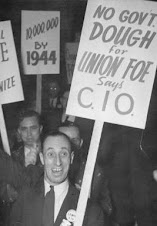
The Goodyear strike was the first big win for the newly formed Committee on Industrial Organization. The CIO was started as a committee of eight unions inside the American Federation of Labor to push for industrial unionism. The conservative AFL practiced craft unionism, focusing on skilled white male workers on a trade-by-trade basis, and resisted the demand to organize the masses of industrial workers by industry.

The CIO welcomed all workers, organizing African-American, Latino/a, Asian, Native, women and immigrant workers who worked in steel, auto, textile, rubber, retail, food service and the public sector.

While not one of the original eight unions, the UAW, which like the CIO was founded in 1935, quickly affiliated. The first auto sit-down was at a Bendix parts factory in South Bend, Ind., and it lasted a week. Midland Steel and Kelsey-Hayes followed. Not only in rubber plants, but in auto plants, this tactic worked.

Why a ‘state of occupation’?

Workers are less vulnerable when they take over the inside of a plant. From 1929 to 1936 no less than 96 workers were killed on the picket line in the U.S. During the worldwide sit-down wave of 1934 to 1937, the only workers killed in a sit-down were six Polish rubber workers in 1936.

Mary Heaton Vorse, a labor journalist who observed the many struggles of the 1930s, wrote:

“The strikers are far less vulnerable than they are on the picket line because employers hesitate to attack the sit-downers when it may injure their own property. The sit-down effects a complete tie-up and the workers are protected against violence and strikebreakers, from cold weather and the rain. The plant is completely closed and scabbing is impossible; as a training ground for education, it is far better than the ordinary strike.”

The New York Times, speaking for the ruling class, lamented that “once a sit-down strike has become a state of occupation, there is little a company can do.”

The ones who were about to launch the historic Flint sit-down had closely watched the events in Akron and France and understood these class dynamics. Building on the successes in Bendix and the Detroit supplier plants, they set out to take on Goliath: General Motors. They had to strike Flint, Mich., the heart of GM’s world empire.

Workers were fed up. Working on the line was hell, and when you got halfway used to the pace, the speedup came. You could be fired for anything or nothing.

Communists, Black workers organize


There were 10 plants in Flint. Fisher Body 1 supplied the whole company with stampings. Shutting it down was critical. The lead organizer and strategist was Bob Travis, a union militant who became a Communist Party member during the big Chevrolet strike in Toledo, Ohio, in 1935. He had been recommended by UAW Vice President Wyndham Mortimer, also a Communist, who had successfully organized auto plants in Cleveland. Mortimer had come to Flint in June of 1936 to rebuild the union. He would leaflet the plants — and the leaflets made their way down the line — with a class-conscious message.

Mortimer believed it was critical to involve Black workers in the organizing drive. He met with them in the basement of an African-American church and workers’ homes. To protect their identities they met in near-dark; the only light was a single candle. They had good reason to be afraid. The “Black Legion” was a Klan offshoot that wore black robes instead of white.

The Legion terrorized the Black community and union organizers. Their most famous casualty was the Rev. Earl Little, the father of Malcolm X, murdered outside Lansing, Mich. Their robes were rumored to have been sewn by pro-company women working overtime in GM’s upholstery plants.

Unlike Mortimer, Homer Martin, the UAW president at the time, was not so progressive. In fact, he was a fan of the notorious Father Charles Coughlin, now seen as the father of hate radio. Martin pulled Mortimer out of Flint, but sent Bob Travis in his place.

Travis had comrades inside Fisher 1. But how to get a sit-down going? There was a dress rehearsal in November. Management tried to cut the number of workers on a particular job, and three workers got in an argument with the boss, which stopped the line. The line got moving, but the next day, two of the workers, the Perkins brothers, found their time cards gone. Workers stopped work. They stood still. The brothers were rehired. Management had to have Flint police locate them and tell them they got their jobs back. It could be done!

A Fisher Body plant in Cleveland also produced stampings. Workers at that plant sat down on Dec. 28. The mighty presses were silenced. Two days later, the Cleveland strike moved outside. On Dec. 30, rumors swirled about the Flint Fisher plant that stamping dies were being moved out of the plant. At a lunchtime meeting, Travis asked the workers what should be done. Cries rang out, “Shut her down!” Before the end of the shift, an occupation was in progress. The Fisher Body 2 plant had already been taken over earlier that day.

Workers from other plants, along with family members of the sit-downers, kept the mass picketing going night and day. Women played an indispensable role, keeping the men fed, providing day care for women picketers’ children, administering first aid, and tackling many other essential tasks.

GM was a Jim Crow operation then. In most plants Black workers were only employed as janitors. The exception was the Buick foundry, where conditions were the worst, and Black workers’ jobs were the worst of the worst. The Buick plant was not on strike, but was idled, and Henry Clark and Prince Combs, in whose homes the dimly-lit organizing meetings had occurred, built support for the union. J.D. Dotson was a Black Communist who carried messages from one picket line to another and in and out of the occupied plants.

On Jan. 11, Flint police decided to storm the plants. This was easier said than done. The workers had been making piles of door hinges and other heavy metal parts. The police were subjected to a hail of these now, hurled from the second floor, along with water hoses turned on them in zero degree weather. The fight raged on, and 12 or 13 strikers were injured by gunfire, along with a supporting striking bus driver. But in the end the cops fled. They ran, and the battle is known as the Battle of Bulls’ Run.

Indispensable role of women


During the Battle of Bulls’ Run, the women showed unprecedented determination. Genora Johnson was the spouse of a Chevy worker and a member of the Socialist Party (and later the Socialist Workers Party). Her immortal words in the heat of battle gave strength to the battered strikers. “Cowards! Cowards!” Johnson shouted at the police, “Shooting unarmed and defenseless men!” She then called on the women to “break through those police lines and come down here and stand beside your husbands and your brothers and your uncles and your sweethearts.” The women, nearly 1,000 of them, heeded her call.

After that fight, Johnson organized the Women’s Emergency Brigade. Only women who felt they could respond to an emergency at a moment’s notice were asked to take the Brigade’s pledge. Told to “expect to face tear gas and bullets on the picket line” and that “you will have to remain strong and fighting even when your sister falls by your side,” 400 women signed up right away. They were on call 24 hours a day, seven days a week.

The Brigade demonstrated its fortitude whenever the police appeared poised to attack. The New York Times reported that strikers had “a large supply of blackjacks … whittled down so that they can be swung or jabbed readily.” In fact, the clubs had been whittled down by the Women’s Brigade to fit their smaller hands.

Leola Combs, spouse of Prince Combs, was one of the women very active in the Brigade.

Bulls’ Run was a real morale booster. If GM bosses thought breaking the strike would be easy, they were wrong. But the company wasn’t about to give in easily. Both sides were holding their ground. What could break the stalemate?

Chevrolet Plant 4 supplied all the Chevy assembly plants in the country with motors. A workers takeover there would hit GM hard. But the plant was heavily guarded. Kermit Johnson, spouse of the Brigade Captain and also a Socialist, is credited with devising the plan. At a mass meeting, where it was assumed there would be company spies (that year GM spent almost $1 million on spies) it was announced that there would be a takeover of Chevrolet Plant 9 — not particularly critical to GM’s operations — on Feb. 1. True to form, the spies ratted out the union, and all of the guards and the police converged on Plant 9.

The Emergency Brigade were the true heroes that day, fighting off the cops and, as captured in famous video footage, smashing the windows to let out the tear gas that the cops fired into the plant. And the sit-down at Plant 4 was underway. When word got out, the women held back the police until the plant was firmly in the hands of the workers.

Building multinational workers’ unity


One of the heroes inside Chevy 4 was Roscoe Van Zandt, an African-American worker. He stayed inside the plant from beginning to end. This was dangerous for a Black worker, and most accounts of the Flint struggle name him as the only one who stayed inside. At first, he kept to himself, but Socialists like Johnson and Howard Foster educated the white workers on the need for solidarity. There was one bed in the plant, and they gave it to Van Zandt. James Todd, whom I interviewed five years ago — I saw him yesterday at the commemoration in Flint. He is still strong at 98 — described Van Zandt as a natural leader.

Immigrant workers were also very active in the strike. Most of them were from Eastern Europe and the majority of them were Polish. They left as a group from a meeting at the Polish hall when they heard about Bulls’ Run in progress. At least one Mexican immigrant, Rafael Arceo, is known to have joined the union in 1936, and he stayed inside for the entire duration of the Fisher 1 sit-down.

Well, the strike continued. Neither the cops, the company’s paid vigilantes (known as the Flint Alliance, they tried to organize a “back to work” campaign), the Michigan National Guard, nor court injunctions could break the workers’ resolve.

Seventy-five years ago today, on Feb. 11, 1937, the workers marched out of the plants, triumphant. GM had signed a contract recognizing the union in 19 key plants. Delirium filled the atmosphere. Tens of thousands celebrated in the streets.

Soon after, all of GM was unionized.

Sit-down fever spread like wildfire. Hundreds were reported and hundreds more went unreported. Every sector of the working class got in on the act: Women at Woolworths and other department stores; textile workers protesting sweatshop conditions; hospital workers in Brooklyn; and city workers in Chicago, who shut down a drawbridge during rush hour. Even blind workers in a workshop and prisoners sat down to win better conditions.

Chrysler fell in line, agreeing to negotiate with the UAW after a 31-day sit-down at six Detroit plants. The strike continued with outside picketing, and in a short time, Walter P. Chrysler recognized the UAW as the sole bargaining agent.

All of Detroit was engulfed. This was true class unity. I remember years ago reading an article, I think the title was “Not Your Father’s Labor Movement.” The theme was that today’s labor movement, with so many women and workers of color, is different from that of past eras — that in the “old days” it was mainly a white male movement. That was never true. In the 1930s, hundreds of thousands of the most oppressed workers showed great militancy and courage — they poured into the CIO. The great organizing drives would probably have failed if it had been otherwise.

Flint is a great example of the importance of unity of Black and white workers. Communists like Mortimer and Travis understood this and went to great lengths to make Black and immigrant workers feel welcome in the UAW.

J.D. Dotson described what it was like before the UAW. The workforce was completely segregated, and African Americans had to use separate entrances or they would be fired. The exception, Dotson recalled, would be during a strike: “They put them in boxcars and bring them over here in the factory. ... So they would stay in there and work for little or nothing until the white man's money run out. Then when the white people's money run out when they was ready to come back to work then they would turn the dark folk like garbage back on the streets.” Crimes like that didn’t happen after the sit-down.

Henry Clark, Prince Combs, Ellsworth Steen and Johnson Buchanan were leaders in the drive to organize the Buick plant. They were respected by all of the workers. Clark was often a delegate to early UAW conventions; at one held in Grand Rapids, Mich., three of six Flint delegates were African Americans.

This is not to say that segregation in the plants ended with the victories of 1937. In fact it still exists today. It was not until World War II and the retooling for war production that assembly line jobs were open to Black workers. Because a foundation of solidarity had been built during the sit-down, Flint was an area where there was relatively little resistance to Black workers coming into the plants.

Friday, January 27, 2012

NYT Covers Communist Party's Role in Sports Integration


From: New York Times

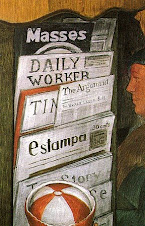
Bill Mardo, a sportswriter for the Communist Party newspaper The Daily Worker who fought major league baseball’s color barrier in the 1940s when the mainstream American news media was largely silent on the subject, died Friday in Manhattan. He was 88.

The cause was complications of Parkinson’s disease, his companion, Ruth Ost, said.

In the years before the Brooklyn Dodgers signed Jackie Robinson as the first black player in modern organized baseball, Mr. Mardo was a leading voice in a campaign by The Daily Worker against racism in the game, a battle it had begun in 1936 when Lester Rodney became its first sports editor.

Mr. Mardo, who joined The Daily Worker in 1942, oversaw its sports coverage, together with Nat Low, during World War II, when Mr. Rodney was in the Army. Mr. Mardo had a deferment, having lost vision in one eye from a childhood virus.

The Daily Worker asked fans to write to the New York City baseball teams urging them to sign Negro league players at a time when the major leagues had lost much of their talent to military service. A milestone in baseball history and the civil rights movement arrived in October 1945 when Robinson signed a contract with the Dodgers’ organization, having reached an agreement with Branch Rickey, the Dodger general manager, two months earlier.

Mr. Mardo covered Robinson’s first spring training, with the Dodgers’ Montreal Royals farm team in 1946, and wrote of the hostility toward him in parts of segregated Florida.

As Robinson was concluding a brilliant 1946 season, Mr. Mardo wrote that racism would be smashed by the arrival of black players, which, he said, “in one fell swoop does as much to arm and educate the American people against this monstrous lie as do all the pamphlets in the world.”

After Robinson’s debut with the Dodgers in 1947, Mr. Rodney and Mr. Mardo called on the owners of the other 15 teams in the majors to sign black players.

Rickey had not acknowledged being pressured by The Daily Worker. But in recounting the campaign to shatter baseball’s color bar, Arnold Rampersad wrote in “Jackie Robinson: A Biography” (1997) that “the most vigorous efforts came from the Communist press, including picketing, petitions and unrelenting pressure for about 10 years in The Daily Worker, notably from Lester Rodney and Bill Mardo.”

Mr. Mardo was born William Bloom in Manhattan on Oct. 24, 1923. His interest in left-wing politics arose when he read a copy of The Daily Worker as a teenager, and he became a member of the Communist Party. He changed his name to Mardo as a tribute to his sisters Marion and Doris when he began his career in journalism.

Apart from reporting on baseball, Mr. Mardo wrote a boxing column for The Daily Worker, “In This Corner.” He left the newspaper to work as a Washington reporter for the Soviet news agency Tass in the early 1950s. He later worked in direct-mail advertising.

His marriage in the 1950s ended in divorce, and he had no children.

In April 1997, Mr. Mardo and Mr. Rodney (who died in 2009) spoke at a symposium at Long Island University’s Brooklyn campus marking the 50th anniversary of Robinson’s debut with the Dodgers.

Mr. Mardo noted that Rickey had not signed blacks when he ran the St. Louis Cardinals for more than two decades and suggested it was not idealism but pressure from black sportswriters, trade unions and the Communist Party that persuaded him to sign Robinson.

“Where were you looking all those years, Mr. Rickey?” Mr. Mardo said. “Istanbul? The South Seas?”

But on April 10, 1947, when the Dodgers announced they were bringing up Robinson from Montreal, Mr. Mardo, sitting in the Ebbets Field press box, could only exult.

“There’s time tomorrow to remember that the good fight goes on,” he wrote for the next day’s Daily Worker. “But, for today, let’s just sit back and feel easy and warm. As that fellow in the press box said, ‘Robinson’s a Dodger’ — and it’s a great day, isn’t it?”

Thursday, January 26, 2012

The product of some recent facebook banter...

It is a tragic mistake when the people's movement falls into the illusion that one section of the 1% (read: capitalist class) is "progressive" or "democratic."

The only hope for the working class is political independence.

OWS, the Wisconsin Uprising, are all examples of the working class writing is own agenda, and telling the entire 1%, both liberals and conservatives to shove it.

CLASS AGAINST CLASS! CLASS AGAINST CLASS!

These words, that William Z. Foster thundered when the Communist Party was a powerful political force in this country are not a revision of Marxism, but its VERY ESSENCE.

-Caleb Maupin

Sunday, January 22, 2012

Nigerian Troops Occupy Capital Following General Strike

By Abayomi Azikiwe
Editor, Pan-African News Wire
Published Jan 21, 2012 4:15 PM


In the aftermath of the general strike, the government of President Goodluck Jonathan has deployed troops to the country’s commercial capital of Lagos. The leadership of the Nigerian Labor Congress and the Trade Union Congress declared the strike over on the evening of Jan. 15 after the administration reduced the amount of fuel cost increases that prompted the nationwide strike and other actions — but still kept the increase at 50 percent.

Members of the Civil Society Organizations and other forces within the labor movement expressed dissatisfaction over the decision to end the strike. Demonstrations have continued for several days in Ogun State and Kaduna.

In Lagos on Jan. 18, when several people attempted to march in protest against the troop deployments, police attacked using tear gas and broke up the demonstration. The protest action was led by Tunji Braithwaite, a 1999 presidential candidate who, like many others, have strongly condemned the use of soldiers against the civilian population.

In response to the ongoing discontent, Inspector General of Police Hafiz Ringim said that anyone demonstrating in the country could be charged with treason. (allAfrica.com, Jan. 18)

Leaders of the NLC and TUC pointed out that they did not agree with the unilateral decision by the Jonathan government to reduce the price of fuel by only 50 percent, after the cancellation of subsidies had raised the cost to consumers by over 100 percent. Nonetheless, the labor leaders said they decided to end the strike in order to prevent greater unrest in the oil-producing state, Africa’s most populous.

Corruption investigation begins

There are reports of massive corruption within the fuel distribution system that have resulted from the subsidies program. However, many Nigerians are asking: Why are these issues coming up now? Are the National Assembly and the federal government attempting to justify the cancellation of subsidies, or the half measures enacted, in an attempt to quell unrest in the country?

Of course, the not-so-hidden hand of the International Monetary Fund and the World Bank are present in the economic policy shifts that are going on now in West and Central Africa’s oil- exporting states. Nigeria is the largest oil exporter on the continent, and the U.S. is becoming more reliant on crude from that country.

Why People's Korea Should Be Defended

By Stephen Millies
Published Jan 21, 2012 3:45 PM

Is there another country more demonized by the U.S. government and corporate media than the Democratic People’s Republic of Korea, also known as north Korea?

The 1% need to lie about oppressed countries and peoples to justify wars and massacres.

The lies told about John Africa and the MOVE organization paved the way for the May 13, 1985, holocaust in Philadelphia. Five children and six adults were killed after Philadelphia police — helped by the Pentagon and FBI — dropped a bomb on the MOVE house.

The only adult survivor, Ramona Africa, was then sent to prison for seven years.

From 1950 to 1953, all of Korea was turned into a MOVE house by the Pentagon. At least 3 million Koreans were killed. Hundreds of thousands were burned alive by napalm. The 400,000 people in north Korea’s capital of Pyongyang had 420,000 bombs dropped on them.

South Korea’s Truth and Reconciliation Commission estimated that south Korean puppet Syngman Rhee executed 100,000 to 200,000 political prisoners.

Despite these massacres, the U.S. war machine wasn’t able to conquer the DPRK. Chinese volunteers fought beside their Korean sisters and brothers. Among the Chinese soldiers who gave their lives for Korea was Mao Anying, a son of Mao Zedong.

Wall Street continues to occupy south Korea and targets north Korea with nuclear weapons.

The U.S. Army’s Yongsan Garrison occupies 620 acres in the middle of Seoul, south Korea. It’s as if a foreign army occupied Central Park in New York City. What sort of independence is that?

146 years of U.S. aggression against Korea


The capitalist media won’t tell you that the heavily armed U.S. merchant ship “General Sherman” tried attacking Pyongyang in 1866. The invaders were thrown back.

Ulysses S. Grant, whose troops won the U.S. Civil War, capitulated to the defeated Southern slavocracy after he became president, refusing to give land to formerly enslaved people who had tilled it for generations. Yet he sent warships to Korea in 1871, trying to open it up to U.S. markets. More than 200 Korean soldiers were killed defending their country.

This U.S. invasion helped open the door for Japanese aggression against Korea in 1876. In 1905, President Teddy Roosevelt practically gave Korea to Japan in the peace treaty he brokered between the Russian czar and Japanese emperor.

At least a quarter of the human beings incinerated by the U.S. in the Japanese cities of Hiroshima and Nagasaki in 1945 were Korean slave laborers. The same U.S. military-industrial complex that dropped these atom bombs refused to drop any bombs on the German railroads that the Nazis used to transport millions to their deaths in Auschwitz.

Socialists should defend the oppressed


The history of the Korean people fighting back should be known and spread widely by socialists. But very little of that appears in a long article called “Socialism in one dynasty,” by David Whitehouse, recently published by the International Socialist Organization in their newspaper, the Socialist Worker.

Instead, Whitehouse attacks People’s Korea, using gossip and phrases lifted from the capitalist media. He also complains that in the DPRK, “the state has to provide health care, education and housing, because there are no institutions outside the state. …” (socialistworker.org, Jan. 12)

This sounds like Ron Paul or the Tea Party attacking Medicare and Social Security. Millions of poor people and unemployed workers would love it if they were provided by the government with jobs, health care, education and housing instead of being fired and evicted by the capitalists.

One of the article’s sources is Atlantic magazine, which was a big cheerleader for the invasion of Iraq in 2003. Michael Kelly, the Atlantic’s editor, was killed while participating in the assault.

The Whitehouse article attacks WWP, the Freedom Road Socialist Organization and the Party for Socialism and Liberation for defending the DPRK. He calls it “satire” that WWP sent condolences to the Workers’ Party of Korea upon the recent death of its leader, Kim Jong Il.

As communists in the belly of the imperialist beast, Workers World Party respects all leaders of people fighting the U.S. empire.

Mocking oppressed people and their leaders is nothing new. John Africa, Marcus Garvey and Kim Jong Il were all ridiculed by the capitalist media. It should be ABC that socialists shouldn’t repeat the slanders of the 1%.

Korea and Cuba, two revolutionary beacons


Korea has a rich revolutionary history. Two million Koreans joined the March 1, 1919, movement for independence from Japanese rule. More than 7,000 were killed.

The Korean people launched an armed struggle for freedom. The most famous guerrilla commander was communist leader Kim Il Sung, the grandfather of north Korea’s new leader, Kim Jong Un. After Che Guevara toured the world in 1960, he said that the most remarkable person he met was Kim Il Sung.

But you won’t find any pictures of Che Guevara in the Socialist Worker newspaper. Cuba, like People’s Korea, isn’t considered to be socialist by this grouping. In fact, there isn’t any country that had a socialist revolution that’s considered socialist by the ISO.

The group supported the Libyan “rebels” who lynched Black people while serving as front men for the U.S./NATO invasion of the African country.

Leningrad, the cradle of the Russian Revolution, endured a 900-day siege during World War II. At least 1 million people died there of starvation and disease. But Leningrad never surrendered to the German imperialists.

The DPRK has been besieged for decades. Great hardships have been endured since the Soviet Union was overthrown in 1991. The U.S. was able to cut off much of the north’s foreign trade, including oil supplies. But Koreans, like the people of Leningrad, will never surrender.

In a besieged fortress, unity is essential. The Workers’ Party of Korea won’t allow imperialists to split their country. That is why the DPRK should be congratulated for its swift action in naming Kim Jong Un to succeed Kim Jong Il as the leader.

Saturday, January 21, 2012

MLK protest hits post office closings


By Gerry Scoppettuolo
Boston
Published Jan 19, 2012 8:47 PM


Occupy4Boston sent an express mail message to Postmaster General Patrick Donahoe for Martin Luther King Day: “Hands off our post office and our community!” Hundreds of community and labor activists picketed and rallied in the very heart of Boston’s Black community on Jan. 14 at the Grove Hall Post Office in Roxbury. It is slated for shutdown by May.

Subfreezing temperatures did not deter people from coming out to defend their jobs and their post office, so sorely needed for services in the community. Charles Clemons of the radio station Touch 106.1, “the heart of the Black community,” chaired the rally. The station broadcast the event live.

Minister Don Muhammad of Nation of Islam Mosque 11 opened the rally by declaring, “If Dr. King were alive, he would be here with us today, to say again, ‘Let justice roll down like waters and righteousness like an ever-flowing stream.’”

Boston City Councillors Charles Yancy, Felix Arroyo, Tito Jackson, Ayanna Pressley and Frank Baker came to give their support. Yancy related his meeting with Dr. King in 1965 and pledged, “We cannot and will not stay silent while they are laying off people at the post office.”

Miya X, representing the Women’s Fightback Network, stressed, “The working class, the poor and our youth are fighting for survival. We need to occupy the MBTA! [Massachusetts Bay Transportation Authority]. Our youth are suffering from a 50 percent unemployment rate and schools are being shut down in the Black community.”
2012 photos by Liz Green

The rally marked the emergence of a new community/labor coalition in Boston — Occupy4Jobs — which is organizing with broad and deep support. The post office struggle has enraged many communities in greater Boston and around the country, as that agency moves to privatize a public sector workforce that has provided good union jobs to hundreds of thousands of workers, many of them in oppressed communities. The Occupy4Jobs Network is organizing community/labor coalitions in Boston, Baltimore, Philadelphia, New York City and San Francisco at breakneck speed as worker anger mounts nationally.

Unions brought out their members to the rally in significant numbers. Paul Kilduff, president of the 2200 member-strong Metro Local 100 of the American Postal Workers Union, while defending dozens of post offices in his jurisdiction, was nevertheless mindful of the impact on Roxbury residents. Under the proposed closings, thousands of people will have to take two buses to the nearest post office in Dudley Square. Kilduff called out: “Services that are desperately needed are being cut back. We will fight back. Whose post office? Our post office!”

Myles Calvey, business agent of International Electrical Workers union Local 2222, rallied the demonstrators with the support of his union, which is currently in a national contract struggle with Verizon Communications Inc. Steve Tolman, president of the Massachusetts AFL-CIO, pledged the support of his 400,000 statewide members.

Other speakers and endorsers included Alan Brown, of Occupy4Jobs; Alberto Borero, a Puerto Rican activist; Stevan Kirschbaum, grievance committee chair of Boston School Bus Drivers, Steelworkers Local 8751; Ed Childs, chief shop steward of UNITE-HERE Local 26; Robert Fitzgerald, Service Employees Local 509; and Lynn Mesa, of Chelsea Uniting Against the War.

Friday, January 20, 2012

40-Mile Trek Scores People's Victory


Published Jan 19, 2012 9:00 PM

By Andre Powell
Baltimore-to-Washington, D.C.


Protesters scored a number of victories on the 40-mile March for Jobs & Justice to Washington, D.C. They began the Civil Rights march on Jan. 14 in Baltimore and were greeted by Occupy Washington, D.C., when they arrived on Jan. 16. Representatives of the group will remain for an Occupy Congress event on the National Mall, where protesters have vowed to set up a million tents.

The marchers’ trek began at Union Baptist Church of Baltimore, where more than 100 people staged a march to Reads drugstore, which was the site of historic Civil Rights sit-ins in 1955. The city administration and big developers have slated to tear the site down, but community activists, led by those who actually participated in the sit-ins, want the site preserved to honor the Civil Rights Movement.

When the group arrived in the downtown shopping area just blocks from Reads, police attempted to clear the street. When they grabbed Occupy 4 Jobs organizer Sharon Black, tearing the hood from her coat and pushing her to the sidewalk, they yelled, “We’re going to make an example out of you! You’ll be the first one on the sidewalk.”

Marchers were defiant, refusing to move to the sidewalk, and continued in the street to the drugstore. Hundreds of shoppers cheered as they watched the group continue.

When the march arrived at the former drugstore, 77-year-old Dr. Helena Hicks got out of the lead vehicle. Thirteen police cars had surrounded the marchers, filling the block of Lexington Street.

Standing in the middle of the street, Dr. Hicks took the microphone and challenged police to arrest her, exclaiming, “We have a right to protest in these streets.” She said there were fewer police at Reads when she participated in the 1955 sit-ins than today, and the police department and the city should be ashamed.

Dr. Hicks was a 20-year-old Morgan State University student when she, along with others, sat in at the drugstore to desegregate the chain that refused to serve African-American people at their lunch counter. Their protests were successful and helped usher in an era of struggle for the Civil Rights Movement in Baltimore.

The standoff between police and protesters continued for about 30 minutes. The group then continued with its plan to send off a smaller delegation to march to Washington, D.C. Fifty protesters began the walk under heavy surveillance by police, who had squad cars follow the group to Route 1.

Protesters prevail at Burger King


The marchers had scheduled a meet-and-greet event with activists in Howard County at a local Burger King, about 15 miles outside Baltimore. Originally the local manager was friendly and welcoming to the group. But before the march arrived, the regional manager told local organizers that the group would not be welcomed or served, and that they could not even be in the parking lot, which was “private property.”

Protesters began calling local and national news media. The group decided not to call off their rally and to go into the store as a group. The Rev. Cortly “C.D.” Witherspoon, president of the Baltimore Southern Christian Leadership Conference, was the first to walk in, picket sign in hand. He was followed by the 50 protesters, accompanied by a newspaper reporter.

Burger King relented. The regional manager who put out the “no protesters” message greeted the marchers with a smile and served the group burgers and fries. One participant remarked, “You can tell he never works here. He doesn’t know where things are behind the counter.”

On Jan. 16, the group finally arrived at Occupy Washington, D.C., tired but elated. The walkers ranged in age from 19 to 71.

The Rev. Witherspoon summed up the sentiments of marchers: “We have won far more than just the tangible victory of bringing the needed attention to the issue of jobs and justice, stopping the police from violating our rights, and forcing Burger King to serve us. We have given hope to the jobless, hope to the youth who are looking for bigger solutions, and solidarity to our participants.”

Friday, January 13, 2012

The Unemployed Workers' Movement

By Dolores Cox
Published Jan 13, 2012 2:43 AM


The history of economic depressions and joblessness in the U.S. can be traced back to the 19th century. Tens of thousands of people rallied in 1837, 1857, 1873, 1884 and 1893 to demand a public jobs program from the federal government. They opposed high food and rent costs, and big business.

Protests in local communities originated in sporadic street demonstrations, rent rebellions and the disruption of relief centers. Initially, local grassroots organizations were loosely structured, held together mainly by periodic demonstrations. But these groups gathered momentum from direct action victories that yielded public assistance money and food and stopped evictions. Protesters were often confronted by federal, state and local troops, who aggressively dispersed their actions.

The Great Depression of the 1930s was a period of economic crisis that drastically affected the daily lives of millions of people, who faced massive unemployment. The economic collapse also impacted those with low-wage jobs. Industries were devastated, as were the towns where they were located.

The 1930s produced the largest movement of the unemployed and poor that the country had ever known. The jobless rebelled against the inequalities produced by capitalism, an institution of rising profits for the wealthy ruling class. Protest movements emerged that pitted the rulers against those who were ruled — those whom the system had failed.

Beginning in 1929, Communist Party activists formed “Unemployed Councils” (renamed “Unemployment Councils” in 1934). The organizers worked the bread lines, flop houses, factories, relief offices and employment office lines. The CP declared those out of work to be “the tactical key to present the state of the class struggle.” Party organizers concentrated on direct action in the streets and relief offices, seeking out opportunities for leafleting and pamphleteering as well as inciting mass actions and agitation. They held mass meetings and focused on a dual approach of community and trade union unity.

Political demonstrations by the unemployed in big cities marched under Communist Party banners with slogans like “Fight—Don’t Starve.” The Unemployed Councils also led mass protests against police oppression and brutality. Mounted and unmounted cops used bare fists, night sticks and tear gas in mass arrests and even killings to disperse the crowds.

Rising anger led to defiance and resistance. Communists declared March 6, 1930, to be International Unemployment Day, and led marches and rallies of the unemployed in most of the major cities in the U.S. Several thousand marched to factories and auto plants to demand jobs and unemployment insurance. Thousands of unemployed veterans descended on Washington, D.C. Millions of unemployed Blacks and whites marched together, sometimes leading to bloodshed instigated by the cops. Federal troops made war on unarmed people, while the mainstream press branded the demonstrations as “riots.”

During the 1930s, the Communist Party played a leading role in fighting for the demands of African Americans — who were devastated by the Great Depression — and helped mobilize them for their struggle. Thousands of them joined the CP. The CP also undertook food collections in the Black community of Harlem, N.Y., where unemployment had risen to as high as 80 percent. In many places, CP activists organized squads to turn utility services back on.

Communist Party-led trade union organizations fought against the white chauvinistic policy of the American Federation of Labor, which excluded Black workers, and demanded a united labor movement based on equal rights for all workers. In the Black Belt South, they also led the sharecroppers union, which fought courageously against the tyranny of the planters. Members of the Black working class subsequently became leaders of the Black liberation movement.

The Unemployed Councils’ headquarters served as meeting halls and places where tired job searchers could rest and talk. Demonstrations soon became more massive and well organized; they gained momentum and grew in size and frequency. Joint rallies comprised progressive trade unions, communist activists and alliances of communities. They called for the “abolition of the profit system.”

In 1936, most major groups of the unemployed merged, and a national poor people’s alliance was formed that agitated and protested to get legislation implemented. Protesters sought to achieve more substantial reform via organizational and electoral pressure for legislative reforms.

Due to people’s unrest, President Franklin D. Roosevelt’s “New Deal” administration put forth more liberal relief policies. Instead of direct public assistance, he called for a public works program.

While the Works Project Administration did provide jobs, the actual number of jobs fell short of the number promised. At the WPA’s peak, only about one in four persons actually gained employment. Job quotas fluctuated wildly with no apparent relation to unemployment, and workers never knew when they might be laid off.

Organization leaders conducted work stoppages and demonstrations on WPA projects, protesting layoffs and demanding more adequate security wages. These leaders were also recognized as the official bargaining agent for WPA workers. They contacted President Roosevelt with reviews of the economic situation, deplored WPA cuts and called for the expansion of the WPA.

A Wealth Tax Act, Wagner Act and Social Security Act were implemented. Under the 1935 Social Security Act, the federal government paid a share of state and local public assistance costs. A Civilian Conservation Corps, designed to stimulate the economy, provided jobs as well.

Local grassroots protests began to decline in militancy as a result of the Roosevelt administration’s more liberal public assistance policy and the absorption of local leaders into bureaucratic roles. The unemployed became less of a threat because they were divided, and the most skilled were absorbed into the WPA. As a result, the government took the stance that less had to be done for them.

By 1936, 2.5 million WPA jobs had been provided, but nearly 10 million people were still unemployed. In 1939, WPA funds were cut, WPA wages were reduced, and workers who had been on WPA payrolls for 18 continuous months were terminated.

Source: “Poor People’s Movements: Why They Succeed, How They Fail” by Frances Fox Piven and Richard Cloward.

Thursday, January 12, 2012

Martin Luther King Jr. Day Launches Another Year of Strugge


By Abayomi Azikiwe
Editor, Pan-African News Wire
Published Jan 11, 2012 9:49 PM


The Rev. Dr. Martin Luther King Jr. would have been 83 years old on Jan. 15. In honor of this iconic civil rights, anti-war and social justice activist, the federal government and other public agencies close every year on the Monday following his birthday. King was martyred in Memphis, Tenn., on April 4, 1968.

This year the King Day holiday will take on profound significance in light of the political and social developments that have occurred over the last year. Millions have taken to the streets around the world in the fight against poverty, increased attacks on working people and the oppressed, and imperialist wars.

Since January of last year, revolutionary movements have emerged from Tunisia and Egypt to Bahrain and Yemen. Rebellions and general strikes led to the resignation of long-time Western-backed puppet President Zine El Abidine Ben Ali in Tunisia and the forced removal of President Hosni Mubarak in Egypt.

In Morocco the monarchy was shaken by mass demonstrations that were largely unprecedented in recent times. Other states throughout the Middle East, Africa and Europe saw popular movements erupt in opposition to rising food prices, the imposition of austerity and the intervention of U.S. imperialism along with its NATO allies.

Workers in European capitalist countries, especially Greece, Spain and Portugal, suffered tremendously from the ongoing world economic crisis. In Britain Black and working-class youth rose up in rebellion in response to the blatant police killing of a Caribbean-British man, who was followed and shot to death in cold blood in London.

Inside the U. S., a people’s uprising in Wisconsin was a direct response to intensifying attacks on public sector workers and their right to collective bargaining. Workers and youth occupied the state capitol in Madison for weeks and drew the attention of people throughout the world.

Occupation participants in Wisconsin paid direct tribute to their class brothers and sisters in Egypt. The progressive forces in Egypt, during the same time period, expressed their solidarity with the people in Wisconsin.

This movement of workers and youth, aimed at defending the right to organize as well as the right to quality education and a decent wage, spread to other states around the Midwest and nationally. In Ohio, legislative actions that were just as draconian as those passed in Wisconsin prompted mass action by trade unions and their supporters.

In Lansing, Mich., the conservative-dominated legislature wasted no time, after securing a majority, to enact bills that drastically cut public spending. These cuts resulted in salary reductions, massive layoffs of public sector employees and the obliteration of city services.

The passage of Public Act 4 in Michigan superseded the former Public Act 72, which allowed for the imposition of emergency management of school systems and municipalities. Public Act 4, now popularly known as the “dictator law,” provides for the nullification of the authority of elected officials, the abrogation of labor and vending contracts, and the forced payment of debt service to the banks, irrespective of the desires of the electorates or the unions.

Public Act 4 has been implemented in several majority African-American cities such as Flint and Benton Harbor. In Detroit — the largest African-American-dominated city in the U.S. — Gov. Rick Snyder recently appointed a financial review panel. The appointment is an effort to justify forcing the city to accept a consent agreement that could ultimately lead to installation of an emergency manager.

Election years — from 1968 to 2012


The year that Dr. King was killed represented a watershed of mass struggle and urban rebellion. The previous year, 1967, saw more than 160 instances of civil unrest throughout the U.S. as well as the emergence of a mass youth movement in opposition to the war in Vietnam.

Although Dr. King was a proponent of nonviolent direct action, he did not condemn the rebellions that swept the country between 1964 and 1968. The civil rights leader viewed the unrest within the urban areas as a result of the failure of the U.S. system to provide adequate living conditions, decent jobs and incomes to the majority of African Americans.

In a “Face to Face” television interview conducted on July 28, 1967, just one day after President Lyndon Johnson announced the appointment of a National Advisory Commission on Civil Disorder, Dr. King said, “I am not calling for a guaranteed annual wage as a substitute for a guaranteed job. I think that ought to be the first thing, that we guarantee every person capable of working a job.” (“Testament of Hope, The Essential Writings and Speeches of Martin Luther King, Jr.,” 2001)

Dr. King pointed out that “this can be done in many, many ways. There are many things that we need to be done that could be done that’s not being done now. And this could provide jobs.”

In 1968, Dr. King and the Southern Christian Leadership Conference set out to wage a real “war on poverty” by taking thousands of poor people to Washington, D.C., to demand jobs and a guaranteed annual income. King had founded the SCLC in 1957 in the aftermath of the Montgomery Bus Boycott. In March 1968, he was invited to Memphis to support a sanitation workers strike that was representative of both the class struggle and the national question.

The year 1968 was an election year just like 2012. The failure of the Democratic Party between 1961 and 1968 to effectively resolve the problems of national oppression, discrimination, economic exploitation, poverty and war played a large part in its losing the elections in 1968.

Despite the fact that the Democratic and Republican parties have different constituencies, both organizations are controlled by the ruling class of bankers and industrialists. Today, even though the Democratic Party has commanded a majority in both houses of Congress between 2006 and 2010 and has controlled the White House since 2009, rates of poverty and exploitation are continuing to rise.

The 2010 election results were a reflection of the lack of motivation on the part of working-class people and the nationally oppressed to once again support Democratic candidates without any real improvement in the concrete conditions under which they live.

The year 2011 saw an acceleration of attacks against workers and the oppressed. The only real defense against these assaults has emanated from the unions, the youth and the oppressed communities themselves.

This is why there needs to be a concerted effort outside of the established ruling class parties to address the crises now facing the majority of people inside the U.S. The response of the Department of Homeland Security to the Occupy Wall Street movement across the country — with DHS operating through local municipal administrations, many of which are led by Democrats — demonstrates that both of the capitalist-controlled parties do not want to see a real grass-roots revolutionary struggle emerge that focuses on the role of the banks and the corporations as the fundamental cause of the economic crisis.

It was the political repression carried out under a Democratic administration in 1968 that created the conditions for the assassination of Dr. Martin Luther King Jr. That same year, FBI Director J. Edgar Hoover declared the Black Panther Party as the leading threat to the national security of the U.S.

After 1967, during the height of the rebellions, the FBI’s Counter-Intelligence Program (COINTELPRO) sought to crush the Black Liberation movement and the anti-war struggle. Scores of activists were killed and imprisoned while the National Guard and conventional military forces were deployed into the cities to smash the rebellions.

Since 2010, the FBI and other DHS branches have targeted immigrants, the nationally oppressed, Muslims, anti-war and solidarity activists for deportation, raids, targeted assassinations and grand jury subpoenas. In the final days of 2011, President Obama signed into law the National Defense Authorization Act, which provides further ammunition for the ruling class to crack down on activists and organizations deemed to be threats to the status quo.

2012: Another year of momentous struggle


In all likelihood this year will also be one of protracted struggle and resistance. Signs of this are already developing, with Jan. 16 King Day actions under the banner of Occupy 4 Jobs – inspired by the Occupy Wall Street movement – in New York, Baltimore, Washington, D.C., Boston, Philadelphia and elsewhere.

Detroit is the focus of a growing mass struggle against the imposition of emergency management. On Jan. 2, more than 2,000 people rallied at Tabernacle Missionary Baptist Church to say “no” to the appointment of an emergency manager.

In a statement, the Moratorium NOW! Coalition to Stop Foreclosures, Evictions and Utility Shut-offs stressed, “The same banks that caused the economic crisis and destroyed the City of Detroit’s tax base, with their fraudulent and racist predatory loans resulting in approximately 150,000 foreclosures in the past five years, now get first lien on city tax dollars for debt service payments.”

Detroit’s 9th Annual MLK Day Rally & March will be held under the theme of “Escalating the Struggle for Jobs, Peace and Justice.” Featured speakers will include contributors to the groundbreaking first-person account “Hands on the Freedom Plow,” which examined the role of women in the Student Nonviolent Coordinating Com­mittee, the vanguard organization within the Civil Rights movement of the 1960s.

The emphasis at Detroit’s MLK Day rally will drive home the need for a cadre-developing organization, a working-class orientation, the important role of women and the oppressed, and the need to build a movement outside the ruling-class-dominated political parties.

Sunday, January 8, 2012

Solidarity Caravan Fights for ILWU

By Terri Kay
Oakland, Calif.
Published Jan 4, 2012 8:55 PM


Jan. 2 — International Longshore and Warehouse Union rank-and-file members and the Occupy movements in Longview, Wash.; Portland, Ore.; Seattle; Oakland, Calif.; Los Angeles and other West Coast cities are organizing to blockade a grain ship arriving in Longview sometime in January. This ship is supposed to be loaded by a non-ILWU crew with cargo from the new EGT export terminal. The date won’t be known until three to four days in advance.

There is a war going on against dockworkers and their families in Longview, Wash. Members of ILWU Local 21 have been arrested, beaten and their homes raided. They are fighting to protect their union jobs against EGT, which is trying to break the ILWU’s coastwide contract, established after the 1934 San Francisco general strike and West Coast Maritime strike.

EGT and its majority partner, Bunge NA, want to bust the ILWU, one of the most militant, progressive unions in the U.S. EGT has broken the union’s contract with the Port of Longview and is using scab labor at its export grain terminal. On Sept. 8, hundreds of angry Longshore workers charged through the gates, and EGT claims that grain was dumped from a 107-car train and a cyclone fence was torn down.

This struggle is occurring at a time when national union membership has dropped to a 70-year low of 11.9 percent, with 6.9 percent of private sector workers in unions. EGT’s actions are part of the ruling-class attack to drive us all to the bottom. Even with low union membership rates, national median weekly wages for union members are $917, compared to $717 for workers not in unions.

The 1% not only wants to take away that extra $200 from the remaining 14.7 million unionized workers, but wants to destroy all unions, especially the militant ILWU, to keep us from organizing to take back what is rightfully ours.

Fighting Wall Street on the waterfront


EGT — a joint venture between U.S.-based Bunge NA, Japanese-based Itochu and Korean-based STX Pan Ocean — is part of the 1%. If EGT is successful in its attack on the ILWU in Longview, that will have a ripple effect on all port workers on the West Coast.

The ILWU is a democratic, bottom-up union with an activist rank and file. It has a strong history of support for community issues — standing up against apartheid South Africa, against the war in Iraq, and for the Wisconsin workers’ struggle against union busting. Bay Area ILWU Local 10 backed community protests after the police killing of Oscar Grant in 2009. They honored picket lines in Occupy Oakland’s Nov. 2 general strike and the Dec. 12 West Coast port shutdown.

Caravans and support actions are being organized up and down the West Coast, nationally and internationally, to greet the STX ship coming to be loaded with scab grain. ILWU Local 10 has pledged support for Local 21’s struggle against EGT and their union-busting drive and has funded a bus to Longview. The San Francisco Labor Council has endorsed the solidarity caravan.

Individuals and organizations are asked to support this critical working-class struggle by joining the caravan or other solidarity actions. Sign up at http://bailoutpeople.org to get involved. As soon as official word of the ship’s pending arrival is confirmed, supporters will be contacted by email and phone to let you know it’s time to mobilize in Longview. If you have a car and are able to take others, or if you would like to be a passenger in a rented bus or van, please indicate that on the website form.

Bunge NA, one of EGT’s parent companies, is headquartered in St. Louis, Mo., with offices in Washington, D.C. and White Plains, N.Y. If you are in these areas, ask your local Occupy group to organize solidarity actions in conjunction with the ship’s arrival in Longview. EGT also has facilities in Chester and Kintyre Flats, Mont. EGT is also building a high-capacity shuttle train loader in Carter, Mont. Bunge has locations all over the Midwest and South. To see if there is a location near you, go to http://www.bungenorthamerica.com/locations/usa/index.shtml.

For updates and further information, visit Occupy Oakland at www.Westcoastportshutdown.org; Defend ILWU at http://www.facebook.com/groups/256313837734192/; or Occupy Longview at www.facebook.com/OccupyLongview#!/OccupyLongview.